
Money plants are among the most popular indoor plants worldwide, valued for their lush greenery, low maintenance requirements, air-purifying benefits, and symbolic association with wealth and prosperity. Across cultures — especially in Feng Shui and Vastu traditions — money plants are believed to attract financial stability, harmony, and positive energy when placed correctly in homes or offices.
Beyond symbolism, money plants are practical decorative plants. Many varieties grow as trailing vines, compact desk plants, or indoor trees. Their adaptability makes them suitable for apartments, offices, balconies, and interior landscaping. This comprehensive guide explores money plants in detail, including varieties, care, symbolism, placement tips, propagation methods, and benefits
🌱 1. Popular Money Plant Varieties


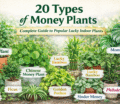
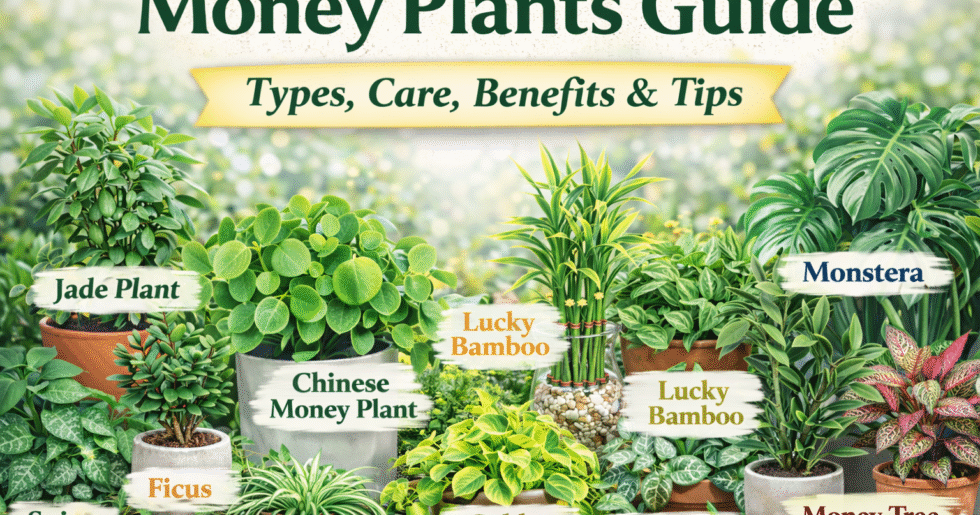
Several plants are commonly called money plants, though they belong to different botanical families. The most recognized include pothos (Epipremnum aureum), jade plant, money tree (Pachira aquatica), Chinese money plant, and lucky bamboo. Each has unique leaf shapes, growth habits, and care needs.
Pothos varieties are trailing vines ideal for hanging baskets. Jade plants are succulents with coin-like leaves. Money trees grow upright with braided trunks. Chinese money plants are compact desk plants, while lucky bamboo is often grown in water.
Choosing the right variety depends on lighting conditions, available space, and maintenance preference. All share decorative appeal and prosperity symbolism.
🌿 2. Visual Diversity of Money Plants


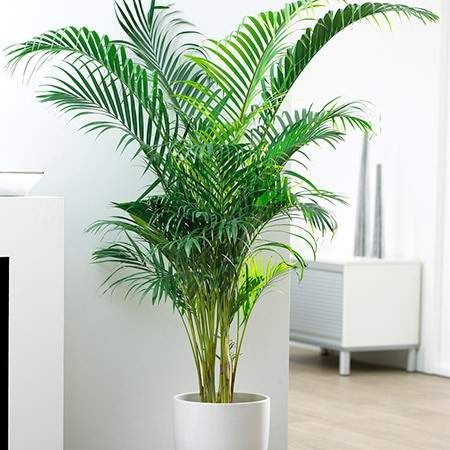
Money plants display remarkable diversity in leaf patterns, color, and growth structure. Some have variegated foliage with white or yellow streaks, while others feature solid green or metallic silver tones. Trailing vines create cascading décor, while upright varieties act as statement plants.
This visual diversity allows money plants to complement various interior styles — minimalist, tropical, modern, or traditional. Their aesthetic versatility is a major reason they remain among the most widely cultivated indoor plants globally.
🌼 3. Symbolism and Cultural Meaning

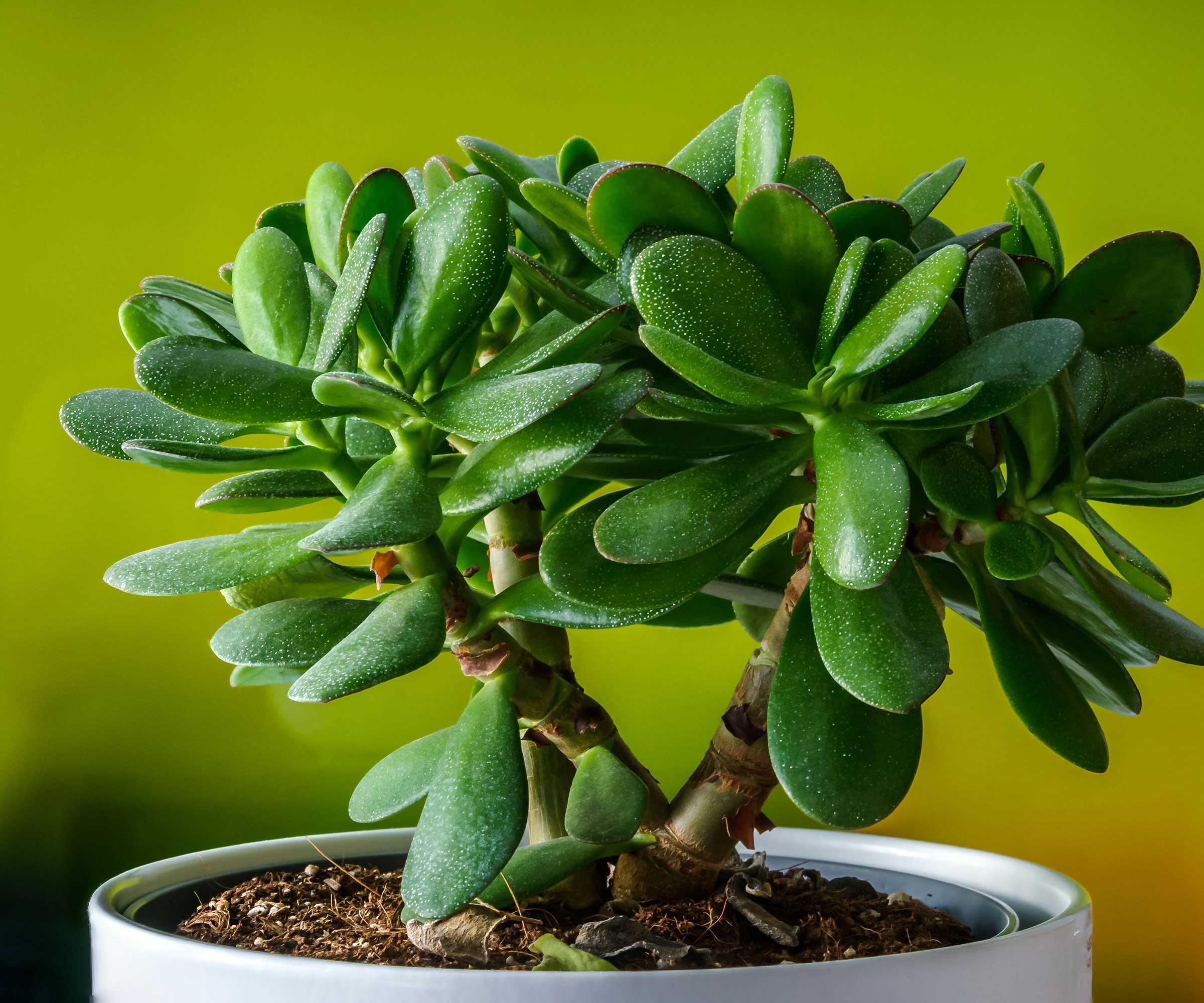

Money plants symbolize prosperity, abundance, and financial luck in many traditions. Feng Shui suggests placing them in southeast areas of homes or offices to attract wealth. Vastu Shastra also recommends specific placements for positive energy.
Beyond financial symbolism, these plants represent growth, harmony, and renewal. Their continuous growth pattern is often associated with expanding opportunities and personal development.
While symbolism varies culturally, the calming effect of greenery and improved indoor air quality provide practical benefits regardless of belief.
🌞 4. Light Requirements


Most money plants prefer bright indirect sunlight, though some tolerate low light. Pothos and philodendrons adapt well to shaded indoor conditions, while jade plants and money trees benefit from brighter light.
Direct harsh sunlight can scorch leaves, particularly variegated varieties. Conversely, insufficient light may slow growth or reduce leaf coloration. Finding balanced lighting ensures healthy foliage and sustained growth.
Indoor placement near east-facing windows often provides ideal lighting conditions.
💧 5. Watering and Soil Needs

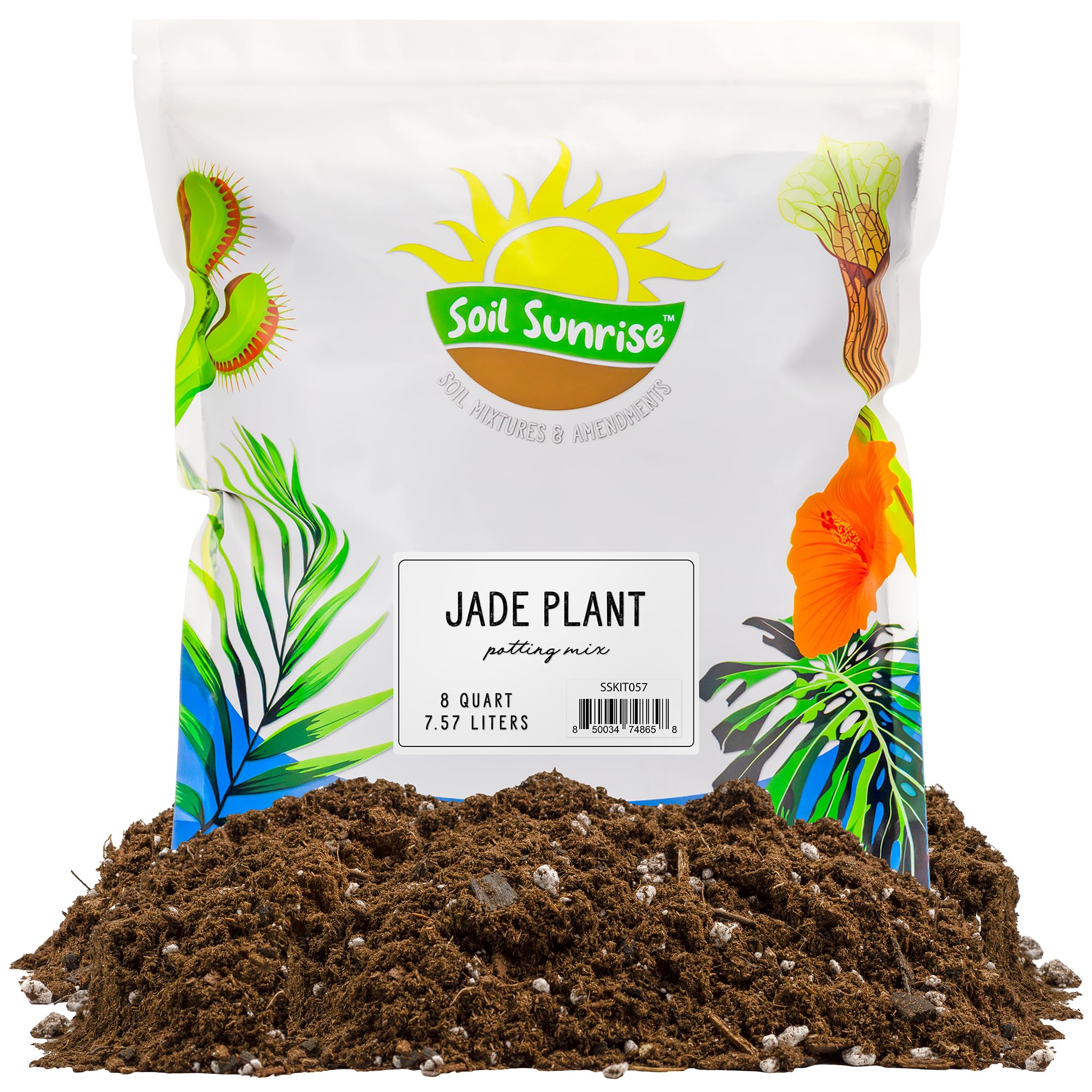

Proper watering is essential for money plant health. Most varieties prefer slightly moist soil but dislike waterlogging. Allowing topsoil to dry between watering helps prevent root rot.
Succulent types like jade plants require less frequent watering. Well-draining soil and pots with drainage holes are crucial. Overwatering remains the most common cause of plant decline.
Using balanced indoor plant fertilizer occasionally supports growth and leaf vibrancy.
🌬️ 6. Air Purification Benefits


Many money plants help improve indoor air quality by absorbing pollutants and releasing oxygen. NASA studies highlighted pothos, philodendron, and spider plants as effective air-cleaning plants.
While they cannot replace ventilation systems, they contribute to healthier indoor environments. Additionally, greenery reduces stress, improves concentration, and enhances mood.
This combination of aesthetic and environmental benefits explains their popularity in homes and offices.
🌱 7. Propagation Methods


Money plants are generally easy to propagate. Stem cuttings placed in water often develop roots within weeks. This method works especially well for pothos and philodendron varieties.
Succulent types like jade plants propagate from leaf cuttings placed in soil. Propagation allows gardeners to expand plant collections economically and share plants with others.
Healthy cuttings, clean tools, and adequate light improve propagation success rates.
🪴 8. Placement Tips for Homes and Offices


Placement influences both plant health and aesthetic impact. Common recommended spots include living rooms, work desks, balconies, or entryways.
Avoid extremely dark corners or direct heat sources. Hanging planters maximize space efficiency, while tabletop plants enhance desk environments.
Proper placement ensures both visual appeal and optimal growth conditions.
9. Common Problems and Solutions


Typical issues include yellowing leaves, slow growth, or pest infestations. Overwatering, insufficient light, or nutrient deficiencies are common causes.
Regular inspection helps detect problems early. Adjust watering, improve lighting, or use mild organic pest treatments when needed.
Preventive care significantly reduces plant health issues.
10. Benefits Beyond Decoration


Money plants offer psychological, environmental, and decorative benefits. Studies suggest indoor greenery reduces stress and enhances productivity.
They also improve interior aesthetics, soften architectural spaces, and provide natural focal points. Their adaptability makes them suitable for beginners and experienced gardeners alike.
Ultimately, money plants combine symbolism, beauty, and practicality — making them among the most beloved indoor plants globally.
Money Plants Care Guide Checklist
| Care Aspect | Checklist | Tips / Notes |
|---|---|---|
| Light Requirements | ✔ Place in bright indirect sunlight | Avoid harsh direct sun to prevent leaf burn |
| ✔ Rotate plant every 2–3 weeks | Ensures balanced growth | |
| ✔ Increase light if growth slows | Variegated types need more light | |
| Watering Routine | ✔ Water when topsoil feels dry | Overwatering causes yellow leaves |
| ✔ Use pots with drainage holes | Prevents root rot | |
| ✔ Reduce watering in winter | Plants grow slower in cold season | |
| Soil & Potting | ✔ Use well-drained potting mix | Add sand or perlite if needed |
| ✔ Repot every 1–2 years | Prevents root crowding | |
| ✔ Choose slightly bigger pot when repotting | Avoid overly large pots | |
| Temperature & Humidity | ✔ Maintain 18–30°C (65–85°F) | Ideal for most money plants |
| ✔ Avoid cold drafts & heat vents | Protects foliage health | |
| ✔ Provide moderate humidity | Mist lightly for tropical varieties | |
| Fertilizing | ✔ Feed every 4–6 weeks in growing season | Use balanced liquid fertilizer |
| ✔ Avoid fertilizing in winter | Plants rest during this time | |
| Pruning & Maintenance | ✔ Trim long vines regularly | Encourages bushier growth |
| ✔ Remove yellow/damaged leaves | Maintains plant health | |
| ✔ Clean leaves gently | Improves photosynthesis | |
| Pest Prevention | ✔ Check leaves weekly | Look for aphids, mites, mealybugs |
| ✔ Use neem oil if pests appear | Natural pest control | |
| ✔ Isolate infected plants | Prevents spread | |
| Placement Tips | ✔ Keep near windows or bright rooms | Avoid dark corners |
| ✔ Southeast placement (belief-based) | Associated with prosperity | |
| ✔ Avoid bathrooms & extreme heat areas | Maintains growth stability |
Final Thoughts
Money plants remain timeless indoor favorites because they are easy to care for, visually appealing, and culturally meaningful. Whether you value their prosperity symbolism, air-purifying qualities, or decorative charm, these plants enrich indoor environments in multiple ways.
With proper lighting, watering, and placement, money plants can thrive for years, adding greenery, calmness, and positive energy to homes and workplaces.
FAQs – Money Plants
A money plant is a popular indoor plant believed to bring prosperity, positive energy, and good luck, commonly including pothos, jade plant, and money tree varieties.
Yes, most money plants are low-maintenance and adapt well to indoor conditions with indirect light, moderate watering, and proper drainage.
Many traditions suggest placing money plants in living rooms, entrances, or southeast corners to promote positive energy and prosperity.
Water when the topsoil feels dry. Overwatering can cause root rot, so good drainage is essential.
While not scientifically proven, many cultures associate money plants with prosperity, harmony, and positive energy, making them popular decorative plants.

Helen is a passionate gardening writer who finds joy in every season, seed, and sprout. With a love for nature and a knack for storytelling, she shares practical tips and inspiration to help gardeners of all levels create beautiful, thriving green spaces. From organic vegetables to pollinator-friendly blooms, Helen’s writing blends experience with creativity, encouraging mindful, sustainable gardening. When she’s not tending to her backyard garden, you’ll find her exploring local nurseries or sipping tea among her flowers. Helen believes that gardening is more than a hobby—it’s a way to grow joy, purpose, and connection with the earth.